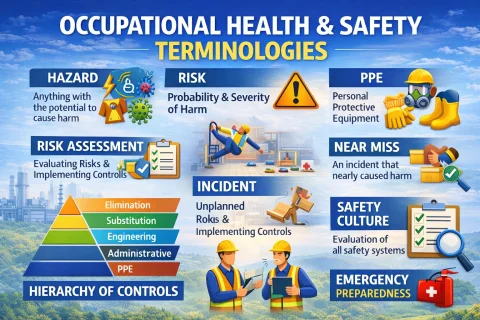
Occupational Health and Safety Terminologies: A Complete Guide for Safety Professionals
Feb 23, 2026

As you walk or drive across the busy street of Nairobi it is not a wonder that you come across children who are hawking sweets and ground nuts persuading you to buy from them, if you gain interest and have a chat with this kids they will explain to you that their parents or guardians expect them to assist in getting the extra coin to assist in their household expenses.
Away from the big cities and into the villages you will find children in coffee, flower and tea farms, and also quarries some who have been forced to leave school and others who are trying to multi task in going to school and also engaging in work. This affects their concentration and hence affecting their performance in school. They also miss out on engaging in children activities.
According to ILO Child Labour is work that deprives children of their childhood, their potential and their dignity, and that is harmful to physical and mental development. It is important to understand where we draw the line between child labour and children engaging in chores at home. Engaging in chores contributes to children's development and to the welfare of their families; it provides them with skills, attitudes and experience, and helps to prepare them to be useful and productive members of society during their adult life.
According to surveys, child labour is still rife and rampant in Kenya today. This could be attributed to many factors not limited to poverty, ignorance, cultural practices and exploitation. In the world's poorest countries, around one in four children are engaged in work that is potentially harmful to their health. Sub-Saharan Africa has the largest proportion of child labourers (29 per cent of children aged five to 17) and is considered detrimental to their health and development.
The law under the Employment Act, 2007, and the Children Act, defines a child in Kenya as a person below the age of 18 years. The Employment Act, Part VII provides for protection of children including protection from the worst forms of child labour.
In section 58 and 59, the minimum age for employment in an industrial undertaking is 16, unless he/she is an apprentice under the Industrial Training Act (Cap. 237, Laws of Kenya). The law also puts a time limit for a child in an industrial undertaking to between 6.30am to 6.30pm.
The Sustainable Development Goals (SDGs), adopted by world leaders in 2015, include a renewed global commitment to ending child labour by 2025.
Kenya has made major progress toward achieving this goal by ratifying most key international conventions concerning child labour, including Minimum Age, Worst Forms of Child Labour, Optional Protocol on Armed Conflict, and Palermo Protocol on Trafficking in Persons.
The country must now also ratify the UN Convention of the Rights of the Child Optional Protocol on the Sale of Children, Child Prostitution and Child Pornography.
[
{
"pageID": null,
"pageTitle": "When Can Employers Test Workers for Drugs or Alcohol?",
"pageSlug": "when-can-employers-test-workers-for-drugs-or-alcohol",
"headline": "When Can Employers Test Workers for Drugs or Alcohol?",
"isRoot": "1",
"pageCont": " When Can Employers Test Workers for Drugs or Alcohol?
\r\n\r\n \r\n Employers are responsible for keeping the workplace safe for everyone, including employees, contractors, and visitors. Part of this responsibility is making sure people are not working while affected by drugs or alcohol.\r\n
\r\n\r\n When Can Testing Happen?
\r\n\r\n \r\n An employer can ask an employee to take a drug or alcohol test if there is a reasonable concern that the employee may be under the influence while at work. This is especially common in safety sensitive roles, such as driving, operating machinery, or working in hazardous environments.\r\n
\r\n\r\n \r\n Any testing must follow the company\u2019s drug and alcohol policy.\r\n
\r\n\r\n Can an Employee Refuse a Test?
\r\n\r\n \r\n An employee can refuse to take a drug or alcohol test. However, refusing a reasonable request may lead to disciplinary action, depending on workplace rules and safety policies.\r\n
\r\n\r\n How Are Drug and Alcohol Tests Done?
\r\n\r\n \r\n There are two common types of workplace drug and alcohol testing.\r\n
\r\n\r\n \r\n Only one test method can be used at a time. All samples are sent to a laboratory for confirmation.\r\n
\r\n\r\n\r\n Clear rules about drugs and alcohol at work help prevent confusion and improve safety. Employees should understand what is allowed, what is prohibited, and how often testing may occur.\r\n
\r\n\r\n\r\n A simple and well explained policy helps protect both workers and employers while promoting a safer workplace.\r\n
\r\n", "showContent": "1", "pageDesc": "when employers can legally test workers for drugs or alcohol, how testing works, and why clear workplace policies matter for safety.", "dateCreated": "Jan 5, 2026 9:50 PM", "date_modified": "2026-01-05 20:56:53", "author": "Nderitu ", "postParent": "585", "isParent": "0", "pageImage": "uploads/img/pages/when-can-employers-test-workers-for-drugs-or-alcohol.webp", "showImage": "1", "imgThumbnail": "uploads/img/pages/thumbnails/when-can-employers-test-workers-for-drugs-or-alcohol.webp", "medium_thumbnail": "uploads/img/pages/medium-thumbnails/when-can-employers-test-workers-for-drugs-or-alcohol.webp", "small_thumbnail": "uploads/img/pages/small-thumbnails/when-can-employers-test-workers-for-drugs-or-alcohol.webp", "xs_thumbnail": null, "active": "1", "showOnNav": "0", "pageType": "Blog", "carouselID": null, "template": "2", "icon": null, "featuredPage": "0", "slideImage": null, "slide_image_small": null, "webp_slide_image": null, "webp_slide_image_sm": null, "slideTitle": null, "slideCaption": null, "showCaption": "0", "hasComments": "0", "font_icon": null, "footer_link": null, "page_video": null, "header_image": "uploads/img/headers/when-can-employers-test-workers-for-drugs-or-alcohol.webp", "menuImage": null, "youtube_playlist": null, "slider_title_color": "#f6921e", "slider_caption_color": "#ffffff", "caption_position": null, "slide_overlay": "0", "page_intro": null, "short_intro": "Employers have a duty to keep workplaces safe. One way they do this is by preventing employees from working under the influence of drugs or alcohol. This guide explains when testing is allowed, how it works, and what employees should know.
", "cta_text": null, "cta_url": null, "menu_title": null, "section_title": null, "embedded_page": "0", "resource_page": "0", "show_header": "0", "require_subscription": "0", "show_menu_title": "0", "image_url": null, "featured": null, "banner": null, "color": null, "date_created": "Jan 5, 2026", "parentSlug": null, "grandparentSlug": null, "url": "featured-articles/when-can-employers-test-workers-for-drugs-or-alcohol", "parentTitle": "Featured Articles", "title": "When Can Employers Test Workers for Drugs or Alcohol?" }, { "pageID": null, "pageTitle": "Protective wear for eyesight ", "pageSlug": "protective-wear-for-eyesight", "headline": null, "isRoot": "1", "pageCont": "Experts believe that 90% of eye injuries could have been prevented with the correct eye protection measures in place.
\r\nThe Eye is a very sensitive body part and an injury to it can cause lingering, permanent vision damage, which has the potential to disable a worker for life. No injury to the eye can be considered as minor cause it can lead to long-term problems and suffering, like recurrent and painful corneal erosion from a minimal scratch caused by sawdust, cement or drywall.
\r\nThere are two Major reasons that cause Workers to experience eye injuries while at work
\r\nAccording to OSHA 2007:
\r\nWhen the following potential eye hazards are present at a work place then it is important to have Protective eye wear:
\r\nOccupations with a high risk for eye injuries include:
\r\nThe Hazards at your work place will determine the type of safety eye protection you should wear:
\r\nKnow the requirements for your work environment. Side shields placed on your conventional (dress) glasses do not provide enough protection to meet the OSHA requirement for many work environments.
\r\nAs an employer it is your responsibility to make sure the work place is utmost safe. Below are some of the measures that you can take.
\r\nEmployees can also play a role in safeguarding their eyes from injury by doing the following:
\r\n1. Know the eye safety dangers at your work.
\r\n2. Eliminate hazards before starting work by using machine guards, work screens or other engineering controls.
\r\n3. Use proper eye protection.
\r\n4. Keep your safety eyewear in good condition and have it replaced if it becomes damaged.
\r\n\r\nSelection of protective eyewear appropriate for a given task should be made based on a hazard assessment of each activity. Types of eye protection include:
\r\nNonprescription and prescription safety glasses. Although safety glasses may look like normal dress eyewear, they are designed to provide significantly more eye protection. The lenses and frames are much stronger than regular eyeglasses. Safety glasses must meet standards of the American National Standards Institute (ANSI). Look for the Z87 mark on the lens or frame. Safety glasses provide eye protection for general working conditions where there may be dust, chips or flying particles. Side shields and wraparound-style safety glasses can provide additional side protection. Safety lenses are available in plastic, polycarbonate and Trivex materials. While all four types must meet or exceed the minimum requirements for protecting your eyes, polycarbonate lenses provide the highest level of protection from impact.
\r\nGoggles. Goggles provide protection from impact, dust and chemical splash. Like safety glasses, safety goggles are highly impact-resistant. In addition, they provide a secure shield around the entire eye and protect against hazards coming from any direction. Goggles can be worn over prescription glasses and contact lenses.
\r\nFace shields and helmets. Full face shields protect workers exposed to chemicals, heat or blood-borne pathogens. Helmets are used for welding or working with molten materials. Face shields and helmets should not be the only protective eyewear. They need to be used in conjunction with safety glasses or goggles, so the eyes are protected when the shield is lifted.
\r\nSpecial protection. Helmets or goggles with special filters to protect the eyes from optical radiation exposure should be used for welding or working with lasers.
\r\nSafety glasses must fit properly to provide adequate protection. Also, eye protection devices must be properly maintained. Scratched and dirty devices reduce vision, because glare and may contribute to accidents.
\r\nCombined with machine guards, screened or divided work stations, and other engineering controls, using the correct protective eyewear can help keep you safe from any type of eye hazard.
\r\n\r\nSource: America Optometric Association
\r\n", "showContent": "1", "pageDesc": "Experts believe that 90 percent of eye injuries could have been prevented with the correct eye protection measures in place.", "dateCreated": "Jul 18, 2018 11:13 AM", "date_modified": "2024-10-27 23:12:54", "author": null, "postParent": "585", "isParent": "0", "pageImage": "uploads/images/202011/image_750x_5fab9d091ab06.jpg", "showImage": "1", "imgThumbnail": "uploads/images/202011/image_750x415_5fab9d092a9d2.jpg", "medium_thumbnail": null, "small_thumbnail": "uploads/images/202011/image_100x75_5fab9d093ac33.jpg", "xs_thumbnail": null, "active": "1", "showOnNav": null, "pageType": "Blog", "carouselID": null, "template": "2", "icon": null, "featuredPage": "0", "slideImage": null, "slide_image_small": null, "webp_slide_image": null, "webp_slide_image_sm": null, "slideTitle": null, "slideCaption": null, "showCaption": "1", "hasComments": "0", "font_icon": null, "footer_link": "0", "page_video": null, "header_image": null, "menuImage": null, "youtube_playlist": null, "slider_title_color": null, "slider_caption_color": null, "caption_position": null, "slide_overlay": "0", "page_intro": null, "short_intro": null, "cta_text": null, "cta_url": null, "menu_title": null, "section_title": null, "embedded_page": "0", "resource_page": "0", "show_header": "1", "require_subscription": "0", "show_menu_title": "1", "image_url": "", "featured": null, "banner": null, "color": null, "date_created": "Jul 18, 2018", "parentSlug": null, "grandparentSlug": null, "url": "featured-articles/protective-wear-for-eyesight", "parentTitle": "Featured Articles", "title": "Protective wear for eyesight " }, { "pageID": null, "pageTitle": "Workers understanding their rights on work related injuries and diseases", "pageSlug": "workers-understanding-their-rights-on-work-related-injuries-and-diseases", "headline": null, "isRoot": "1", "pageCont": "Many workers do not know their rights on injuries sustained at work or employment related diseases, hence this leads to most of them not being compensated for the money they use to seek medical attention and also some end up being terminated unfairly.
\r\nAccording to ILO Social Security (Minimum Standards) Convention, 1952 (No. 102), the contingencies covered under the employment injury benefit include the following accident-at-work or employment-related diseases:
\r\nThe range of benefits required by Convention No. 102 includes
\r\nHowever, those benefits are only one, if the most visible, of the facets of employment injury protection.
\r\nIn Kenya: The Work Injury Benefits Act, No. 15 of 2007, provides for compensation to employees for work related injuries and diseases contracted in the course of their employment and for connected purposes.
\r\nUnder the right to compensation (Part III) of Work Injury Benefits Act, an employee who is involved in an accident resulting in the employee's disablement subject to the provisions of this Act is entitled to the benefits provided for under this Act. The liability falls squarely on the employer. To deal with such liabilities an employer is obligated to obtain and maintain an insurance policy, with an insurer approved by the Minister in respect of any liability that the employer may incur under this Act to any of his employees (section 7).
\r\nThese laws have been put in place to address the key challenges at work places. It is the responsibility of employers to ensure they provide occupational safety and health of their workers at the work place.
\r\nIn case of work related accident or disease the employer is mandated with ensuring fair, equitable, and effective compensation of workers and access to necessary health care (covering medical and allied care services and goods, including rehabilitation). In the event of death, this responsibility extends to providing compensation to workers' survivors to cover the loss of income suffered as a consequence of an accident or occupational
\r\nA very low percentage of workers are aware of the above laws on the work Injury benefit Act. Hence so many accidents go unreported. The government needs to step up and educate workers on their rights and procedures that they need to undertake when they get in a work related accident or contract diseases. Hence this will make employers more liable for their employees and provide more conducive working environment.
\r\n", "showContent": "1", "pageDesc": "Many workers do not know their rights on injuries sustained at work or employment related diseases", "dateCreated": "Jun 20, 2018 11:50 AM", "date_modified": "2024-10-27 23:12:54", "author": null, "postParent": "585", "isParent": "0", "pageImage": "uploads/images/202011/image_750x_5faba51de459e.jpg", "showImage": "1", "imgThumbnail": "uploads/images/202011/image_750x415_5faba51df2b05.jpg", "medium_thumbnail": null, "small_thumbnail": "uploads/images/202011/image_100x75_5faba51e0a297.jpg", "xs_thumbnail": null, "active": "1", "showOnNav": null, "pageType": "Blog", "carouselID": null, "template": "2", "icon": null, "featuredPage": "0", "slideImage": null, "slide_image_small": null, "webp_slide_image": null, "webp_slide_image_sm": null, "slideTitle": null, "slideCaption": null, "showCaption": "1", "hasComments": "0", "font_icon": null, "footer_link": "0", "page_video": null, "header_image": null, "menuImage": null, "youtube_playlist": null, "slider_title_color": null, "slider_caption_color": null, "caption_position": null, "slide_overlay": "0", "page_intro": null, "short_intro": null, "cta_text": null, "cta_url": null, "menu_title": null, "section_title": null, "embedded_page": "0", "resource_page": "0", "show_header": "1", "require_subscription": "0", "show_menu_title": "1", "image_url": "", "featured": null, "banner": null, "color": null, "date_created": "Jun 20, 2018", "parentSlug": null, "grandparentSlug": null, "url": "featured-articles/workers-understanding-their-rights-on-work-related-injuries-and-diseases", "parentTitle": "Featured Articles", "title": "Workers understanding their rights on work related injuries and diseases" }, { "pageID": null, "pageTitle": "Responsibilities of Employees on their safety at work ", "pageSlug": "responsibilities-of-employees-on-their-safety-at-work", "headline": null, "isRoot": "1", "pageCont": "It is the responsibility of employers to ensure that their employees are safe at their work places but this does not mean that the employees do not have roles that their play to make sure that they are safe at their work place.
\r\nAccording to The Occupational Safety and Health Act, No. 15 of 2007 and revised in 2010, the duties of an employee in safe guarding their own safety include:
\r\nBy following the above guidelines the employees contribute towards their safety and safety of others who are at their work place. Safety comes first and everyone at the work place should strive to make sure that they are safe.
\r\n", "showContent": "1", "pageDesc": "It is the responsibility of employers to ensure that their employees are safe at their work places", "dateCreated": "Jun 20, 2018 11:45 AM", "date_modified": "2024-10-27 23:12:54", "author": null, "postParent": "585", "isParent": "0", "pageImage": "uploads/images/202011/image_750x_5faba4a3bfed3.jpg", "showImage": "1", "imgThumbnail": "uploads/images/202011/image_750x415_5faba4a3d18bb.jpg", "medium_thumbnail": null, "small_thumbnail": "uploads/images/202011/image_100x75_5faba4a3dcf44.jpg", "xs_thumbnail": null, "active": "1", "showOnNav": null, "pageType": "Blog", "carouselID": null, "template": "2", "icon": null, "featuredPage": "0", "slideImage": null, "slide_image_small": null, "webp_slide_image": null, "webp_slide_image_sm": null, "slideTitle": null, "slideCaption": null, "showCaption": "1", "hasComments": "0", "font_icon": null, "footer_link": "0", "page_video": null, "header_image": null, "menuImage": null, "youtube_playlist": null, "slider_title_color": null, "slider_caption_color": null, "caption_position": null, "slide_overlay": "0", "page_intro": null, "short_intro": null, "cta_text": null, "cta_url": null, "menu_title": null, "section_title": null, "embedded_page": "0", "resource_page": "0", "show_header": "1", "require_subscription": "0", "show_menu_title": "1", "image_url": "", "featured": null, "banner": null, "color": null, "date_created": "Jun 20, 2018", "parentSlug": null, "grandparentSlug": null, "url": "featured-articles/responsibilities-of-employees-on-their-safety-at-work", "parentTitle": "Featured Articles", "title": "Responsibilities of Employees on their safety at work " }, { "pageID": null, "pageTitle": "Towards the urgent Elimination of Hazardous Child Labour", "pageSlug": "towards-the-urgent-elimination-of-hazardous-child-labour", "headline": null, "isRoot": "1", "pageCont": "The construction sector in Kenya that has lately experienced a boom is on the spotlight once again as failures to enforce regulations escalate collapse of residential apartments leading to loss of lives.
\r\nKenya has in the recent past grappled with collapse of buildings in major cities despite launch of a code of conduct by regulatory agencies to weed out malpractices in the construction industry that contributes 7 percent to the country's GDP.
\r\nThe collapse of a five-storey building in Nairobi's low income Huruma suburb at dawn on June 3 where three people died and several injured, was a confirmation that Kenya's construction sector is not yet out of the woods.
\r\nMike Mbuvi Sonko, the Nairobi County Governor who oversaw rescue efforts at the collapsed building, said that his administration will conduct fresh inspection on residential flats in low income settlements to determine their safety.
\r\n\"We are going to carry out a thorough inspection on all buildings in residential premises and proceed to demolish the ones that are structurally weak. The county government will enforce stringent measures in the construction sector to avert future disasters,\" Sonko remarked.
\r\nThe densely populated Huruma estate located on the eastern section of Nairobi has become the epicenter of collapsed buildings that lead to loss of lives and displacement of families.
\r\nSeven people died in Huruma estate in April 2016 when a six-storey building collapsed due to failure by the contractor to follow sound architectural guidelines.
\r\nThe collapse of another building in the same estate in late April 2016 where 50 people died, forced authorities to embark on a campaign to restore sanity in the construction industry.
\r\nBoth the central and county governments have since 2016 carried out a campaign to enforce standards in the construction sector in the light of malpractices that lead to collapse of buildings.
\r\nThe National Construction Authority in conjunction with Nairobi county government carried out an audit of all residential apartments in low income suburbs to determine their safety.
\r\nSeveral buildings that were found to be structurally weak were demolished in Huruma and other densely populated suburbs in the capital.
\r\nCharles Kerich, the Nairobi City County Lands and Housing Executive, told reporters at the site of the collapsed building in Huruma Estate that nine structures have been demolished in the crowded estate since 2016 due to safety concerns.
\r\n\"We have earmarked several buildings for demolition in Huruma and the exercise will not stop until developers adhere to newly launched code of conduct in the construction sector,\" Kerich said.
\r\nHe revealed that 600 buildings in Nairobi, majority of them in Huruma estate, were declared unsafe by the inspectorate department of the county government in December last year.
\r\nKenya's construction sector is rated among the most vibrant in the region but ethical lapses have battered its image to the detriment of its future growth.
\r\nExperts said radical measures should be adopted by the regulatory agencies to restore order in a sector that has attracted huge investments while generating jobs for the youth.
\r\nNathan Ngugi, a Nairobi-based real estate consultant, said adherence to construction guidelines, capacity building for artisans, public awareness and robust inspections are key to promote safety in residential buildings.
\r\n\"Developers who flout rules to put up sub-standard buildings that pose risk to tenants should be given stiff penalties. A well-regulated construction sector will definitely attract more investments,\" Ngugi said.
\r\nPresident Uhuru Kenyatta has been on the frontline to promote ethical standards in the construction sector following collapse of residential apartment blocks that peaked in 2016.
\r\nKenyatta in 2015 ordered state agencies to conduct an audit of buildings in Nairobi to determine their safety following an outcry from the public who bore the brunt of malpractices in construction industry.
\r\nSource: Xinhua
\r\n", "showContent": "1", "pageDesc": "The collapse of a five-story building in Nairobi's low income Huruma suburb was a confirmation that Kenya's construction sector is not yet out of the woods.", "dateCreated": "Jun 6, 2018 12:15 PM", "date_modified": "2024-10-27 23:12:54", "author": "Administrator", "postParent": "585", "isParent": "0", "pageImage": "uploads/images/202011/image_750x_5fabab9e33e10.jpg", "showImage": "1", "imgThumbnail": "uploads/images/202011/image_750x415_5fabab9e46ee9.jpg", "medium_thumbnail": null, "small_thumbnail": "uploads/images/202011/image_100x75_5fabab9e524b8.jpg", "xs_thumbnail": null, "active": "1", "showOnNav": null, "pageType": "Blog", "carouselID": null, "template": "2", "icon": null, "featuredPage": "0", "slideImage": null, "slide_image_small": null, "webp_slide_image": null, "webp_slide_image_sm": null, "slideTitle": null, "slideCaption": null, "showCaption": "1", "hasComments": "0", "font_icon": null, "footer_link": "0", "page_video": null, "header_image": null, "menuImage": null, "youtube_playlist": null, "slider_title_color": null, "slider_caption_color": null, "caption_position": null, "slide_overlay": "0", "page_intro": null, "short_intro": null, "cta_text": null, "cta_url": null, "menu_title": null, "section_title": null, "embedded_page": "0", "resource_page": "0", "show_header": "1", "require_subscription": "0", "show_menu_title": "1", "image_url": "", "featured": null, "banner": null, "color": null, "date_created": "Jun 6, 2018", "parentSlug": null, "grandparentSlug": null, "url": "featured-articles/ethical-lapses-blamed-in-kenyas-construction-sector", "parentTitle": "Featured Articles", "title": " Ethical lapses blamed in Kenya's Construction Sector" } ]